Arsh Sharma
Developer Experience Engineer

Emojiologist 😜

View all authors

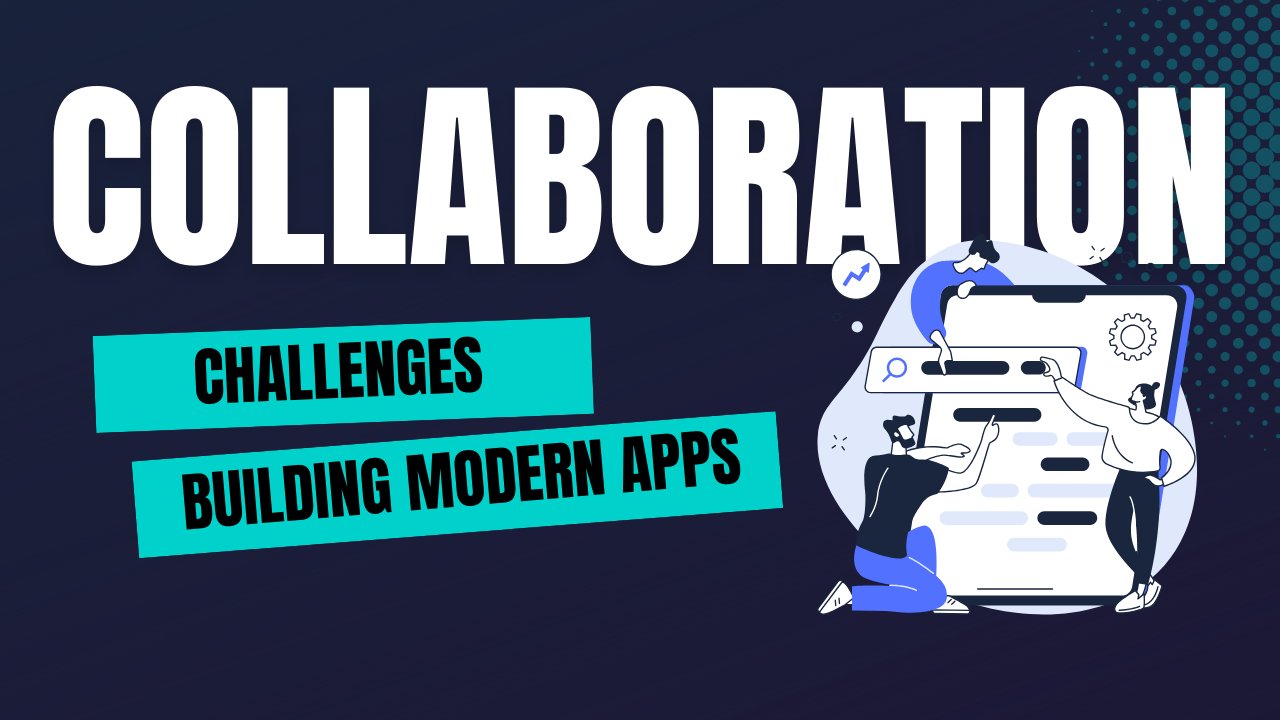
The image features the text "Collaboration: Challenges Building Modern Apps" in bold white and blue letters. The background is dark with a subtle dotted pattern on the right side. To the right of the text is an illustration of three people working together to build or design a large interface, symbolizing teamwork in the development of modern applications. The overall theme emphasizes the importance and challenges of collaboration in the process of building contemporary software applications.

How Developers Can Seamlessly Collaborate When Building Microservice Apps

Building microservices based applications is inherently challenging. Given the multitude of components involved, it is unrealistic to expect any individual to possess comprehensive knowledge of all the different technology stacks. Therefore, collaboration with other team members becomes absolutely essential. However, this collaboration is not always straightforward either. In this article, we will delve into the common issues that teams encounter when developing cloud-native applications with a distributed microservices architecture, and explore how Okteto can help address these challenges.

Arsh Sharma
The image features the text "Slash Your K8s Costs" in bold green, white, and blue letters. The background is dark with subtle, wavy patterns. On the left side of the text is the Kubernetes logo, a white ship's wheel inside a blue hexagon. The design focuses on the concept of reducing costs associated with Kubernetes (K8s), a popular platform for automating deployment, scaling, and operations of application containers. The overall theme is about optimizing financial efficiency in Kubernetes operations.

Slash Your Kubernetes Costs During Development

Using Kubernetes can be quite costly, to be frank. Regardless of the cloud provider you choose for your cluster, there are expenses associated with the deployed applications and the cloud resources they consume. If you're considering adopting Kubernetes-based development and preview environments, you may wonder how to effectively manage these costs. Let's delve deeper into the topic and explore Okteto's Garbage Collector feature, which automates resource management to help reduce cloud infrastructure expenditures.

Arsh Sharma
The image features the text "Five Challenges with Developing Locally Using Docker Compose" in bold white letters on a dark blue background with a hexagonal pattern. The Okteto logo, consisting of a teal circle with a stylized "C" and the text "Okteto," is placed at the bottom right. The design highlights the difficulties developers may face when working locally with Docker Compose, suggesting that Okteto may provide solutions or insights related to these challenges.

Five Challenges with Developing Locally Using Docker Compose

After the popularization of containers, a lot of the development workflow started leaning on Docker Compose. Developers would have a Docker Compose file which defined how to build the container images for all their services, what ports to expose, and have volumes attached to their containers. They would then run the containers locally and leverage the attached volumes to develop their application. However, there are a lot of limitations in this flow which not only hamper developer productivity but can also cause security issues and bugs. Let's discuss some of these and see how using Okteto you can fix these problems.

Arsh Sharma
The image features the text "The Way You're Using Kubernetes Clusters During Development Is Killing Productivity!" in bold white letters on a dark blue background with a hexagonal pattern. The Okteto logo, a teal circle with a stylized "C" and the text "Okteto," is positioned at the bottom right. The design suggests that current practices in using Kubernetes clusters during development might be inefficient or counterproductive, with Okteto possibly offering a solution to enhance productivity.

The Way You're Using Kubernetes Clusters During Development Is Killing Productivity!

Transitioning from development to production is always challenging. There's that underlying fear of overlooking something crucial, such as misconfigurations or misspelled environment variables, which can lead to broken systems. The advent of Kubernetes and other cloud-native technologies has further compounded this complexity. In this article, we will delve into the prevalent strategies that organizations employ to tackle these challenges, examine their possible limitations, and explore how Okteto not only resolves those issues but also provides valuable additional features!

Arsh Sharma
The image features the logos of Okteto and Argo. The background is split into two sections: the left side is dark blue with a hexagonal pattern and contains the Okteto logo (a teal circle with a stylized "C" and the text "Okteto"), while the right side is white with a subtle hexagonal pattern and displays the Argo logo, which includes a cartoon octopus wearing a helmet next to the word "argo" in bold black letters. The design suggests a collaboration or integration between Okteto and Argo, two tools often used in cloud-native and Kubernetes environments.

Using ArgoCD With Okteto for a Unified Kubernetes Development Experience

ArgoCD is a powerful tool for continuous deployment that leverages Git repositories as the ultimate source of truth for managing Kubernetes deployments. As a CNCF project, it has garnered tremendous popularity in recent years due to its user-friendly interface, adherence to GitOps principles, and enhancements to the software delivery lifecycle. In this article, let's explore the capabilities of ArgoCD, the benefits of incorporating it into your dev lifecycle, and understand how it can help create a unified development experience with Okteto!

Arsh Sharma
Blue background with white words that say myths around preview environments and the okteto logo in the lower right corner

Myths Around Preview Environments

Preview environments are rapidly becoming a crucial part of the development experience when building cloud native applications. They provide everyone in your organization a way to see new features, test bug fixes, and provide early feedback by deploying the changes in a Pull Request before it gets merged. In the previous article, we looked at four reasons Preview environments are a must-have for platform and development experience organizations looking to boost developer productivity. This time, we will debunk some of the common myths associated with them, which will help us understand their utility even better!

Arsh Sharma
Why Your Team’s Developer Experience Matters

Happy developers write better code. Over the last decade, the era of cloud and mobile applications brought about tools like Docker, platforms like Kubernetes, and architectural patterns like microservices to help development and production teams deliver what we know today as modern applications. But somewhere along the way, we seem to have forgotten about the development side of the equation and overlooked the increased gap between development and production. And that has had a huge negative impact on the developer experience!

Arsh Sharma